It is also a hot-water problem and that makes comfort-led conservation more powerful.
A long shower does not only use more water. It asks the home to keep making more hot water.
Most advice about showers is measured in litres. Take shorter showers. Choose a water-efficient showerhead. Watch the flow rate. In Australia, that advice is sensible. Energy.gov.au says the biggest water users in the home include showers, and Water Corporation says showers account for 31% of household water use. Those numbers make the bathroom an obvious place to look for savings.
But the shower is not only a water problem. It is a hot-water problem.
That distinction matters because hot water carries a second cost. It has to be heated, stored or generated on demand, then delivered to the bathroom every time someone turns the handle. Energy.gov.au describes water heating as the second largest segment of household energy use, ranging from 15% to 30%. YourHome puts the figure at 23% of energy used in an average Australian home, and notes that more than half of hot water use happens in the bathroom. In plain terms, a shower is where water conservation and energy conservation meet.
This is why the long-shower conversation deserves a better frame. A conventional long shower is not wasteful only because it runs water down the drain. It is wasteful because it keeps asking the household to heat new water for a ritual that people often value for reasons beyond hygiene: warmth, privacy, recovery, thinking time and the feeling of stepping out reset.
The usual answer is to shorten the ritual. That works mathematically. Water Corporation advises four-minute showers, and says the average shower in Western Australia lasts over six minutes. Energy.gov.au shows how even a 1 L/min difference in shower flow can save a family of four nearly 12 kL of water each year, based on its assumptions. Better showerheads matter. Timers can help. Behaviour change has a place.
But behaviour change has a ceiling. It asks the person to do less of something they may genuinely need at the end of the day. That is why sustainability messages around the shower so often sound like discipline: hurry up, turn it off, use less, enjoy less. The message may be correct, but it is not especially imaginative.
The stronger opportunity is not to shame the warm shower. It is to redesign the cost of keeping it warm.
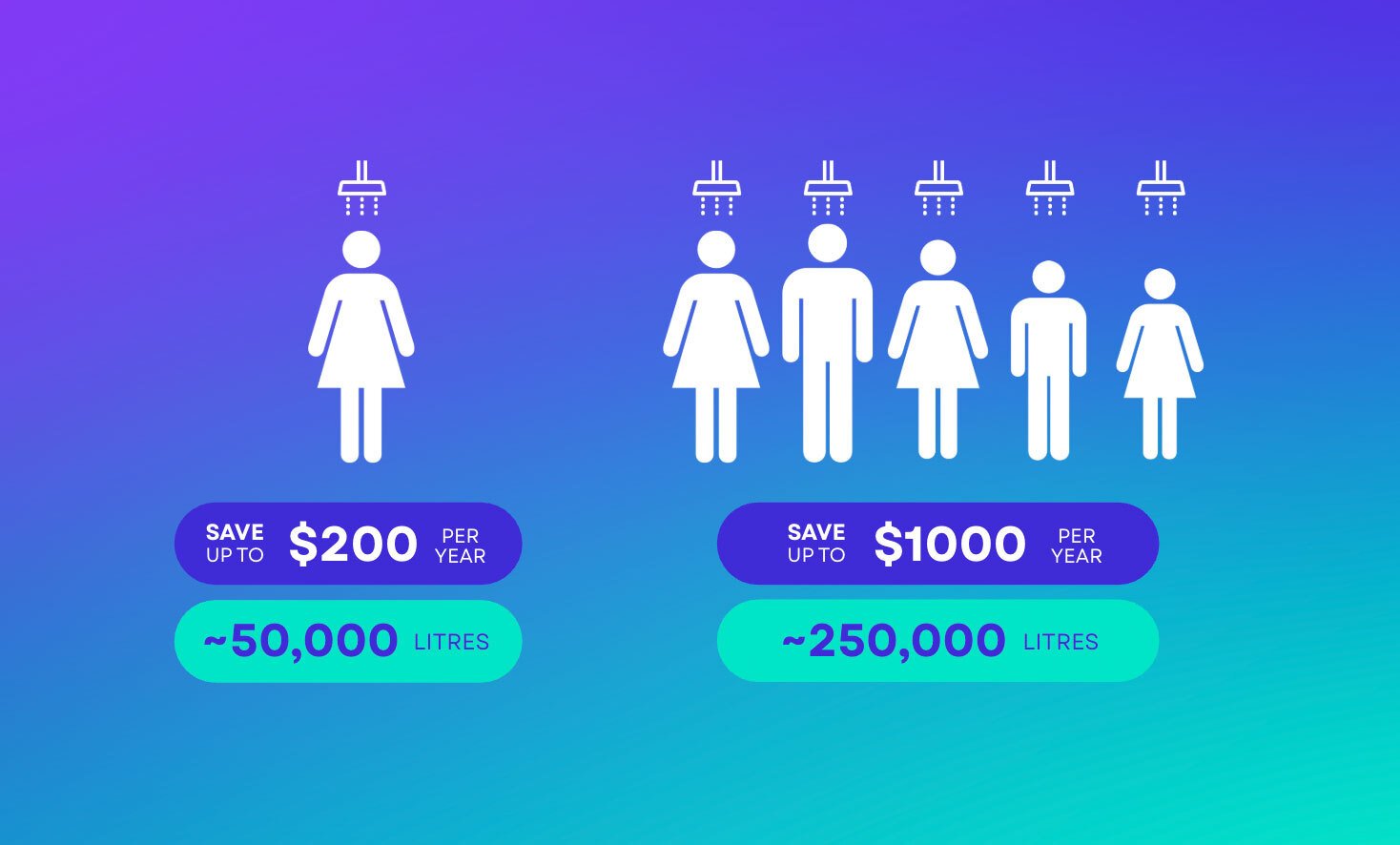
A recirculating shower changes the conversation because it challenges the single-pass model. Instead of treating every minute as a fresh demand for more heated water, circular shower design captures, cleans and reuses water during the session. ShowerLoop describes itself as a water-saving circular shower that uses 70–80% less water than a conventional shower without compromising comfort. Its own site is careful to say real-world results will vary, and that is important. Early product claims should stay transparent. But the design direction is clear: preserve the feeling people want, while reducing the resource intensity behind it.
That gives ShowerLoop a sharper point of view than “save water.” The better line is: stop wasting hot water. It is more specific, more practical and more emotionally honest. People already understand that hot water costs money. They understand the frustration of running out of it. They understand the guilty little calculation that happens when a shower feels too good to end. The brand can meet that tension directly.
This does not mean encouraging endless showers without consequence. A responsible circular shower still needs clear limits, filtration, hygiene standards, maintenance, testing and honest savings data. It should not pretend that comfort is free. The point is different: comfort does not have to be tied to the old level of waste.
Australia is a strong market for this story because households already have the vocabulary. WELS labels show shower flow rates in litres per minute. Water utilities talk openly about shorter showers and efficient fittings. The Australian Bureau of Statistics reports that average household water use rose to 174 kL in 2023–24 after five years of decline, which keeps water use visible as a household and national issue. The public does not need to be convinced that water matters. The more interesting task is showing that conservation can feel like an upgrade.
The future shower should feel generous to the person using it, and disciplined only in what it wastes.
For ShowerLoop, that is the editorial territory worth owning. Not guilt. Not sacrifice. Not another bathroom timer. A better shower system, designed around the real problem: the unnecessary loss of water that has already been heated, paid for and enjoyed for only a few seconds.
The shower is where the day softens. It should also be where better design quietly does its work.
Source links




Comments